Feature Preview (4/1/24)
It has been a while since I’ve provided a new feature preview for OpenVSP. Folks seemed to enjoy them, so here is a glimpse of what I’ve been working on for a while (this is a lot of work and seeing this should go a long way to explain why the release cadence has been a bit slow lately)…
TLDR; If you’ve ever wondered how stealth aircraft are designed, now is your chance to find out!
OpenVSP is being improved with a high fidelity simulation and design capability for all-aspect low-observables aircraft. The cool part about this realtime simulation capability is that the designer will see what the sensors would ‘see’. Consequently, as your design progresses, you know you have achieved an optimal design when the aircraft disappears entirely.
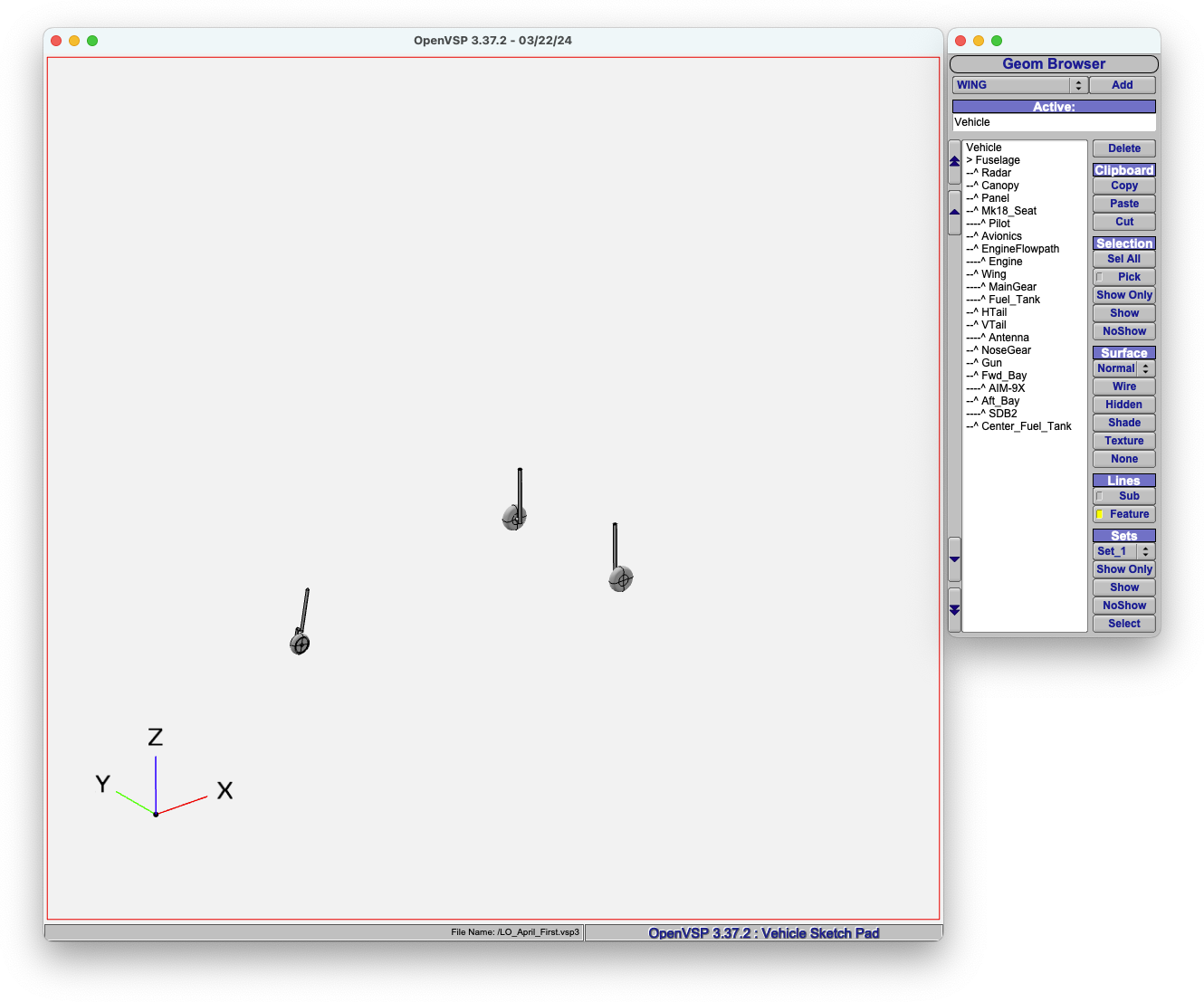
Below is a screenshot of a working session where I developed an example single-engine, piloted low observable fighter / attack aircraft. As you can see, this aircraft will be entirely invisible to sensors when the gear is retracted.
If you want to check out a preview of this feature, a Beta version is available from the OpenVSP download site. Due to the sensitive nature of this capability, we can not make it available to everyone. You will see a download link there if you are authorized to use this software.
Feature Preview (4/1/23)
Folks seemed to appreciate last week’s preview of an up-and-coming feature (rounded wingtips with an extension), so here is another preview of something I’ve been working on…
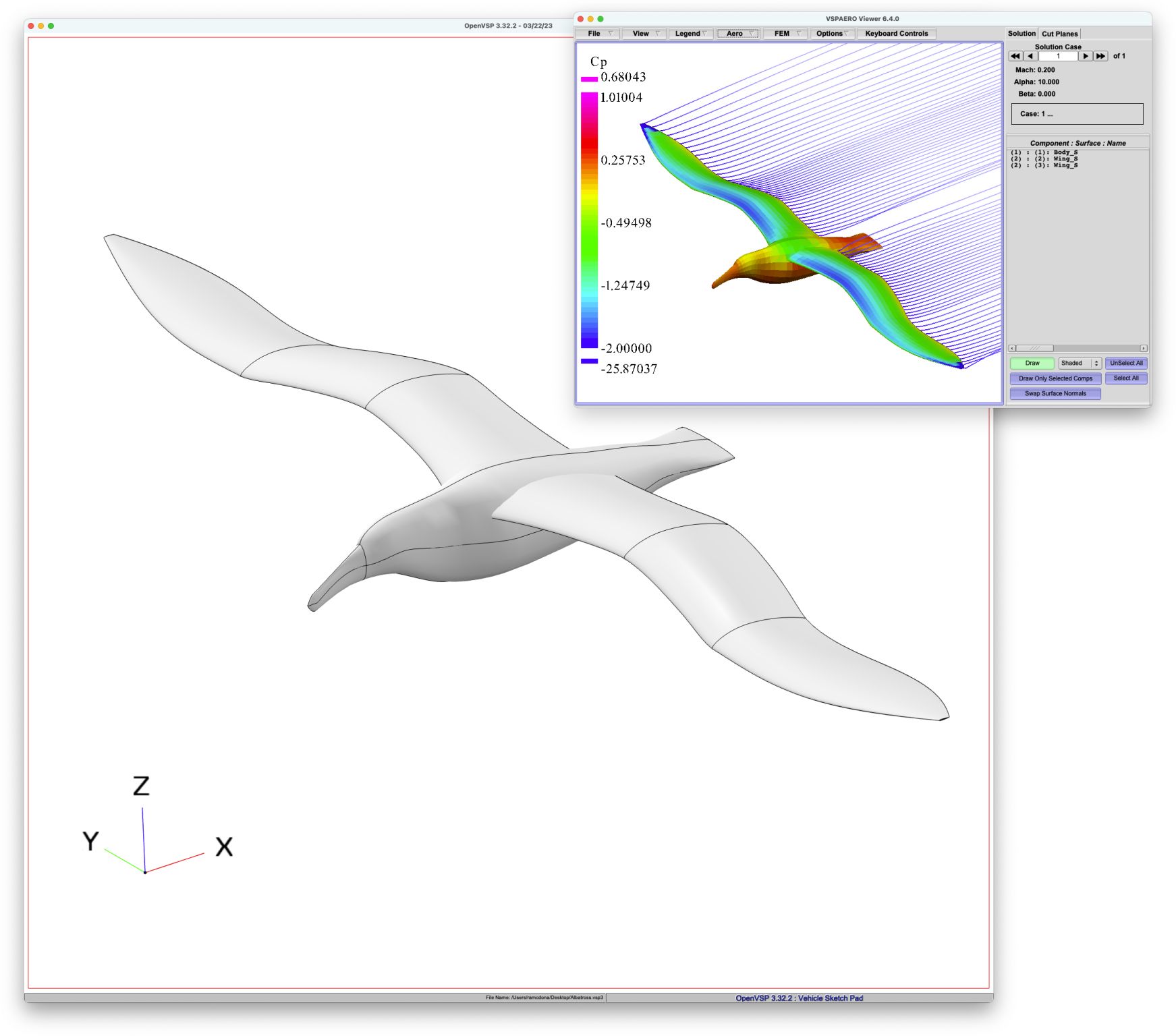
I have implemented an evolutionary optimization algorithm in OpenVSP. In this example, I set the objective function to sustainable flight and let it run for fifty million years. This is the result…
Developers of wing-in-ground-effect aircraft should take note, this solution sets a high water mark for efficiency achieving what seems to be perpetual motion. It uses an adaptive neural network flight control system to follow optimal trajectories consisting of wandering circles and figure eights while zooming and diving. These trajectories extract energy from the shear layer of the wind over the ocean; using this technique it is able to circumnavigate Antartica with no propulsive energy expenditure.
Similar to some WIG concepts being explored, this system operates without oversight from the FAA and without any certification whatsoever.
This system may represent the breakthrough technology to developing autonomous flight systems. It has demonstrated high reliability of all DAL-A systems without any DO-178C processes or documentation. Curiously, the system also mates for life.
Unless Wisdom prevails, next week I’ll preview OpenVSP integration with Chat GPT.
OpenVSP 3.31.0 Released (10/31/22)
OpenVSP 3.31.0 Released
Lots of structures stuff and one Halloween surprise. Get the latest version, its sure to be a treat!
Even if you aren’t into structures, this release includes one very subtle feature that should impact every single user. It is worth updating for this feature alone!
The catch? I’m not going to tell you what it is. We’ll see who is the first to figure it out. Post your guesses on LinkedIn or the Google Group.
OpenVSP Halloween Edition!
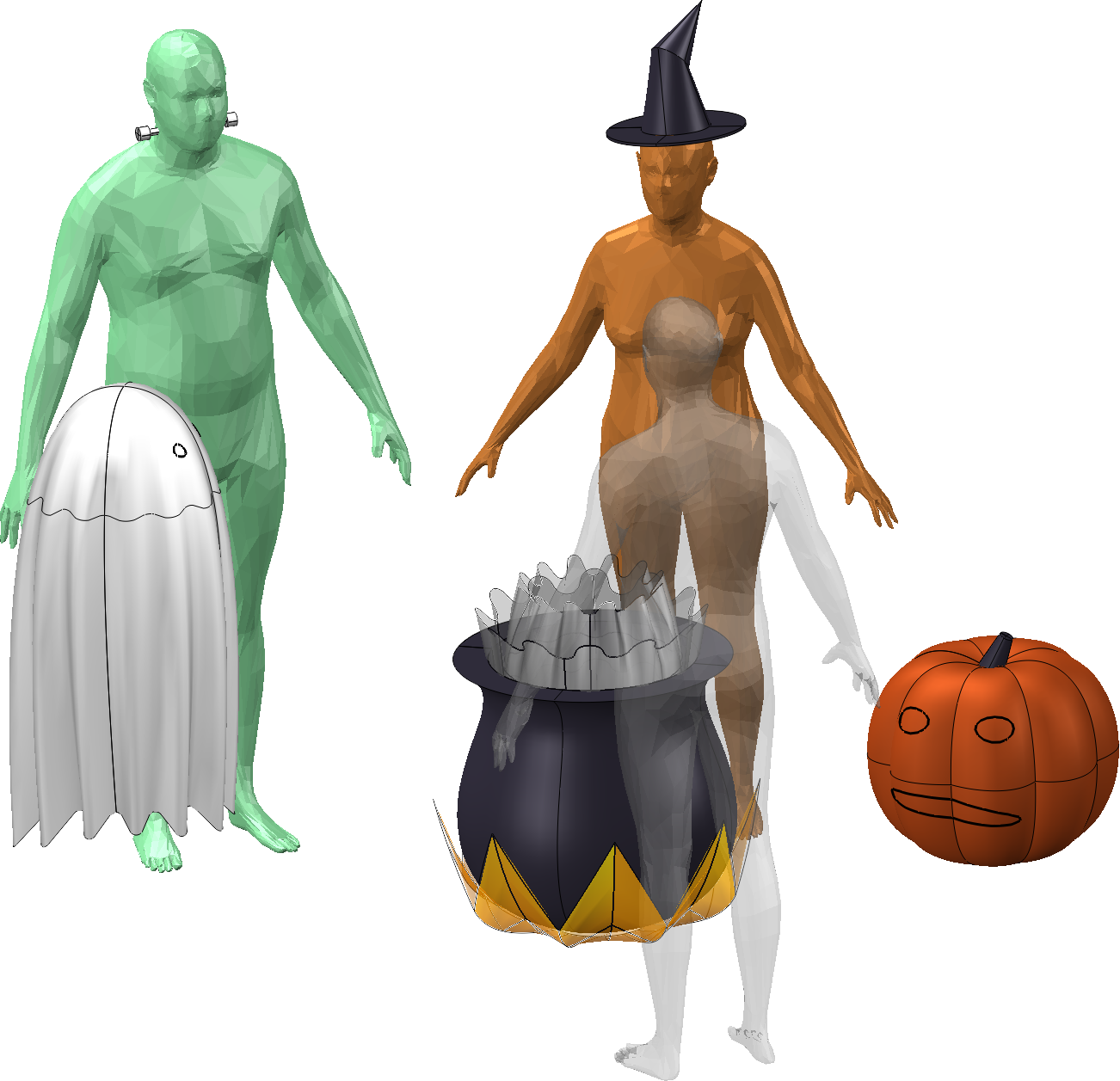
For those of you keeping track, this ominous release was foreshadowed back in the 3.28.0 release notes. Like that release, this one is all about structures. There are a few other things, but mostly structures.
That isn’t to say if you don’t use OpenVSP’s structures capability you shouldn’t update — you most certainly should.
This release includes one very subtle feature that should impact every single user. It is worth updating for this feature alone!
The catch? I’m not going to tell you what it is. We’ll see who is the first to figure it out. Post your guesses on LinkedIn or the Google Group.
First, some of the non-structures updates…
NACA 6A Series airfoils will now be restricted to the modified a=0.8 camber line. Although in many cases we go beyond the strict NACA airfoil definitions and allow things their creators did not intend, in this case it seems appropriate to restrict ourselves. If you consider this a bug fix, it has been with us since the first 6-series support added in RAM v2.1 in the early 2000’s.
The Analysis menu has received some re-organization and renaming to facilitate all the structures work. There are now “Structure” and “Aero” sub-menus. Hopefully everyone’s muscle memory will adjust without too much trouble.
The CMake build system has been extended to build RPM files for RedHat type distributions. We are not yet providing pre-built RPM’s as our CI build servers only run Ubuntu. This should be useful for anyone supporting multiple RPM based machines.
There are a bunch of VSPAERO fixes and cleanups. Nothing really major here, but a whole bunch of little things from the team.
And the structures updates…
The FEA Mesh workflow has been broken apart. You can now generate a mesh without writing it to file — and write a previously generated mesh to file at a later time. This added flexibility was required for some of the later improvements, but come as a nice addition on their own.
Structural boundary conditions can now be specified for each structure. BC’s are applied to mesh nodes. The user selects which DOF to restrict and also how to identify which nodes to apply each BC to.
Structural assemblies have been added. Each assembly is made of one or more structures. These structures can be connected with rigid links between Fixed Points in each structure. Assemblies are written out to a combined FEM file with node and element offsets automatically generated.
A VSPAERO / CalculiX based Aero-Structure workflow GUI has been added. This GUI helps guide the user through a process of generating loads, applying them to a structure, and then analyzing the result.
Note: This is the final release where an Ubuntu 18.04 package will be built for download. Please update to 20.04 or 22.04.
Features:
- Trick or treat? Halloween mystery feature…
- Add structural assemblies made from multiple structures.
- Add rigid connections between structures in assembly.
- Add boundary condition specification to structures.
- Add aero-structure coupled problem GUI using CalculiX and VSPAERO.
- Split FEA Mesh generation from writing to file.
- Also split FEA CAD file generation and export from Meshing.
- Keep FEA Mesh in-memory, allowing more flexible workflow.
- Re-arranged menus to group structures and aero analyses.
- Build RPM packages for RedHat-based distributions. Thanks Jeff A.
- Add aerodynamic center stability mode to GUI.
- Force NACA 6A series to use a=0.8 camber line. Thanks Daniel M.
- Remove VSPAERO single analysis from API – reduce code duplication.
Bug Fixes:
- Allow non-unique names in pull-down menus. Thanks Brandon.
- Make environment.yml match Python version. Thanks Jason W.
- Fix component IDs passed to *.vspgeom. Fixes propellers.
- Write NORMAL at all B32 nodes, not just the first.
- Fix exporting symmetrical propeller at origin to STL. Thanks Brandon.
- Insert FixPoins before InitMesh — guarantee Fix Points
- Lots of VSPAERO fixes
- Lots of structures fixes
OpenVSP 4.1.22 is Released (4/1/22)
An epiphany resulted in a big change to how OpenVSP works. Most importantly, the ability to model imperfect aircraft has been entirely eliminated. Everyone will want to update ASAP!
This version comes with a bit of a philosophical change for OpenVSP. It may take some adjustment, but I’m sure it will be for the best. The change is substantial enough that it warranted a significant version number bump.
Upon further reflection, I’ve come to the same conclusion as countless teenagers who dream of airplanes. The best airplane possible is the SR-71.
In a bold step to simplify the aircraft design process, all OpenVSP models will now be the SR-71. Optimization and design is much simpler when you already know the answer. The user interface is greatly simplified, all parameters have been eliminated.
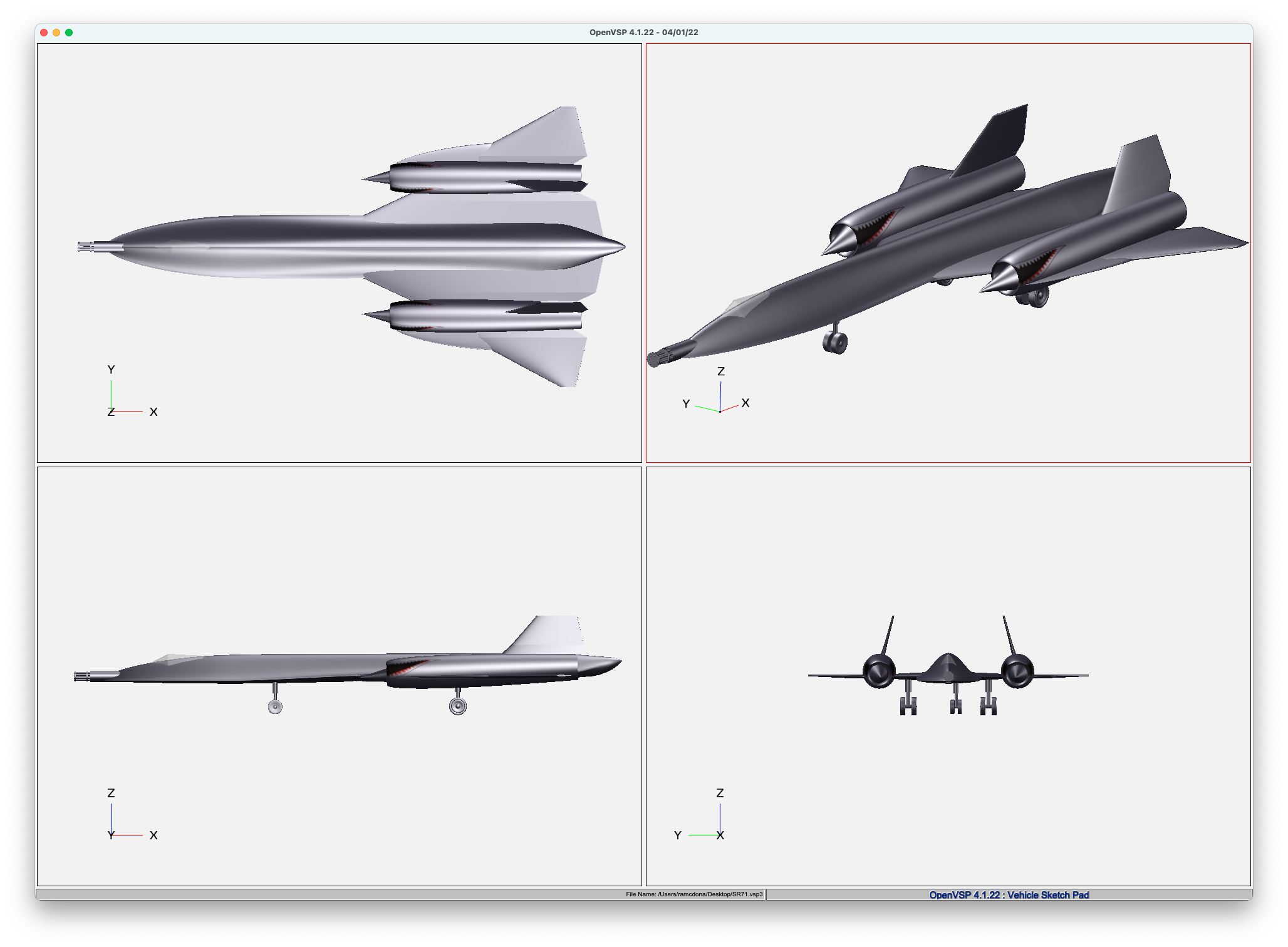
The only reason we sometimes previously designed aircraft that were not the SR-71 was because of the use of high fidelity tools early in the design process. I’m looking at you CFD. These tools include approximations that are invariably wrong and lead to designs like the space shuttle, helicopters, and other things that are not a SR-71. By eliminating these tools, we eliminate their inherent approximations and are able to arrive at the correct answer every time.
The SR-71 design has been slightly improved, incorporating aspects from the universally recognized runner up best airplane possible.
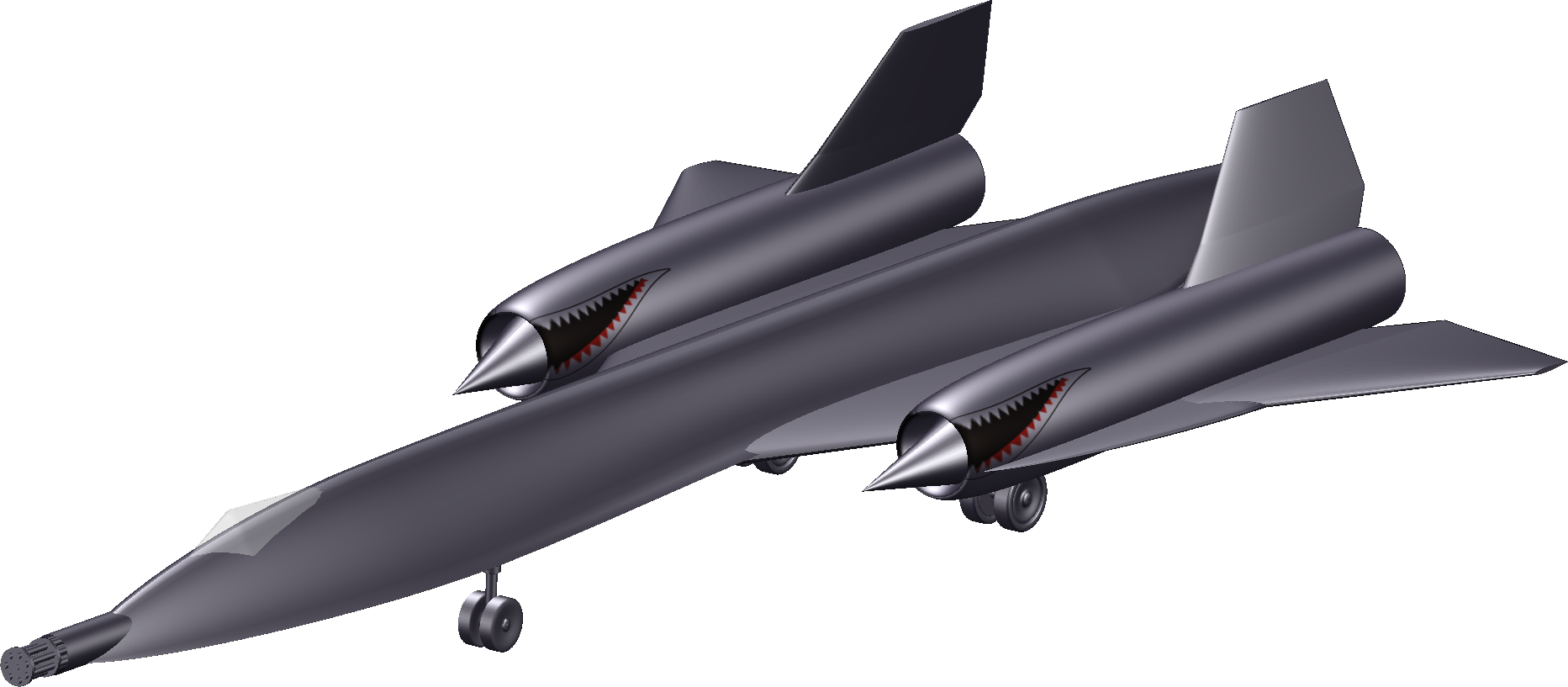
This goes without saying, but everyone should update ASAP.
Features:
- SR-71
- Higher, faster, farther
- GAU-8
- Offset nose gear
- Sharks teeth
Bug Fixes:
- Eliminated process from aircraft design process
- Removed ability to model inferior aircraft